Buy gramatvede.eu ?
We are moving the project
gramatvede.eu .
Are you interested in purchasing the domain
gramatvede.eu ?
domain@kv-gmbh.de · 0541-91531010
Buy gramatvede.eu ?
Should one learn grammar or vocabulary first when learning Japanese?
When learning Japanese, it is generally recommended to start with vocabulary before diving into grammar. Building a strong vocabulary base will help you understand and communicate better in the language. Once you have a good grasp of basic vocabulary, you can then focus on learning grammar rules to structure your sentences correctly. Ultimately, a balance of both vocabulary and grammar is essential for mastering Japanese. **
How can I quickly memorize 20 vocabulary words by tomorrow?
One effective way to quickly memorize 20 vocabulary words by tomorrow is to create flashcards. Write the word on one side and the definition on the other, then review them multiple times throughout the day. Another method is to create a story or mnemonic device that connects the words and their meanings in a memorable way. Additionally, practicing active recall by testing yourself on the words and their meanings will help reinforce your memory. Finally, try to use the words in context by incorporating them into sentences or conversations to further solidify your understanding and retention. **

Similar search terms for 20
Top-Angebote
Products related to 20:
-
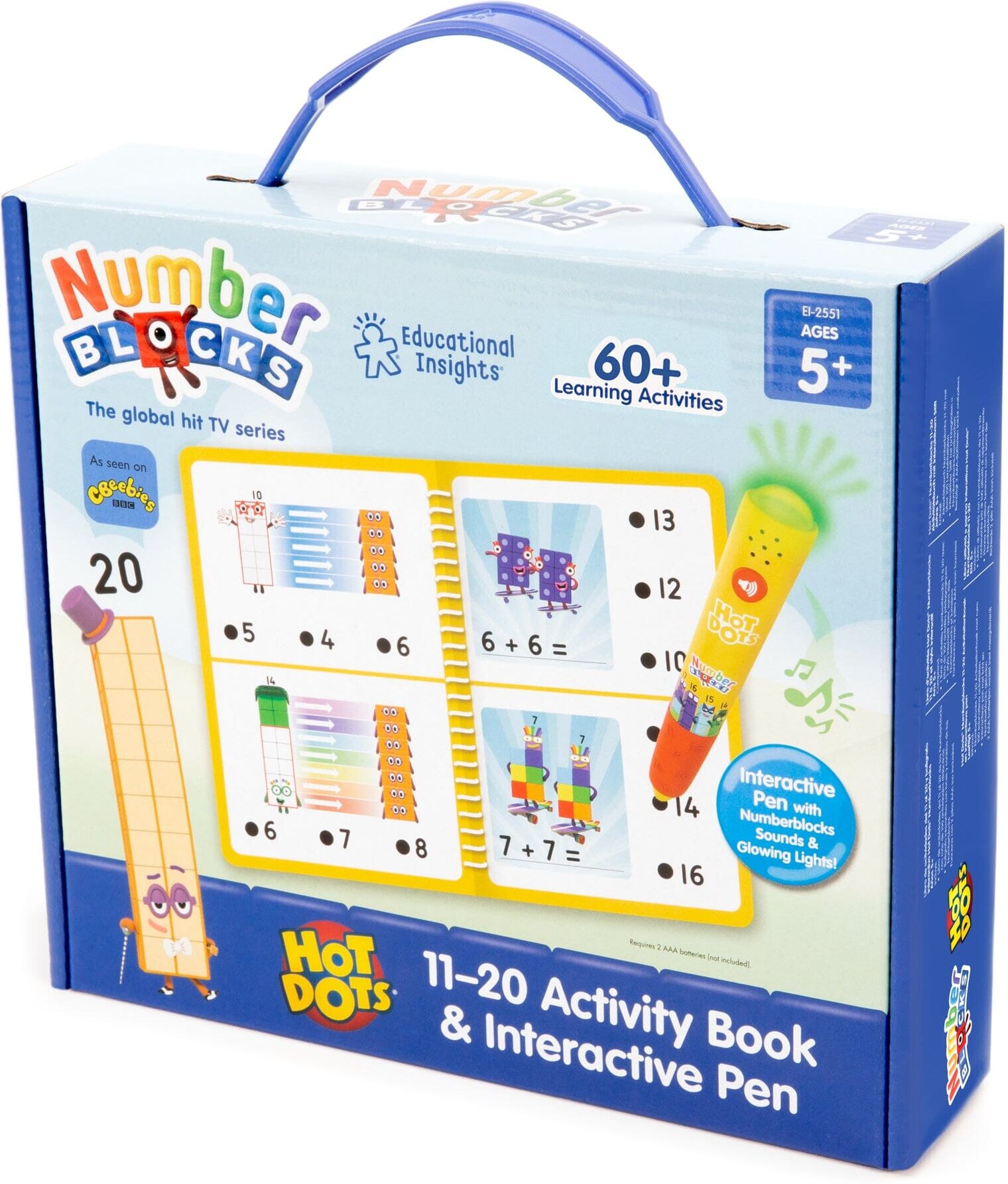
Learning Resources Hot Dots Numberblocks 11–20 Activity Book & Interactive Pen, Over 60 Activities Included - Age 5+ - Educational Toy Learning ResourcesCount on Hot Dots to bring learning with the Numberblocks to life anywhere, anytime. The Hot Dots interactive way of learning encourages children to learn independently and at their own pace. Hot Dots is easy to use – review the question and touch the tip of the interactive Hot Dots pen to a dot for immediate feedback. Select the correct answer and the pen glows green. The pen glows red for the incorrect answer. Press the audio button to incorporate fun Numberblocks sounds into the learning. The special edition Numberblocks Hot Dots pen is chunky and easy for little hands to hold, and has a rubberised, textured grip. The durable, spiral-bound Activity Book has over 100 activities featuring Numberblocks Eleven to Twenty. The content covers a range of early years maths activities including number recognition for 11–20, number order, matching, addition and subtraction, multiplication and division, comparing numbers, and problem-solving. Includes Numberblocks 11–20 Activity Book and interactive pen. Book measures 19cm L x 14cm W and the pen is 16cm L. After the learning fun is over, the book and interactive pen store inside the packaging which also has a convenient carrier handle. Pen requires 2 AAA batteries not included.26,99 £*Shipping: 2,99 £Secure redirect to the provider
-
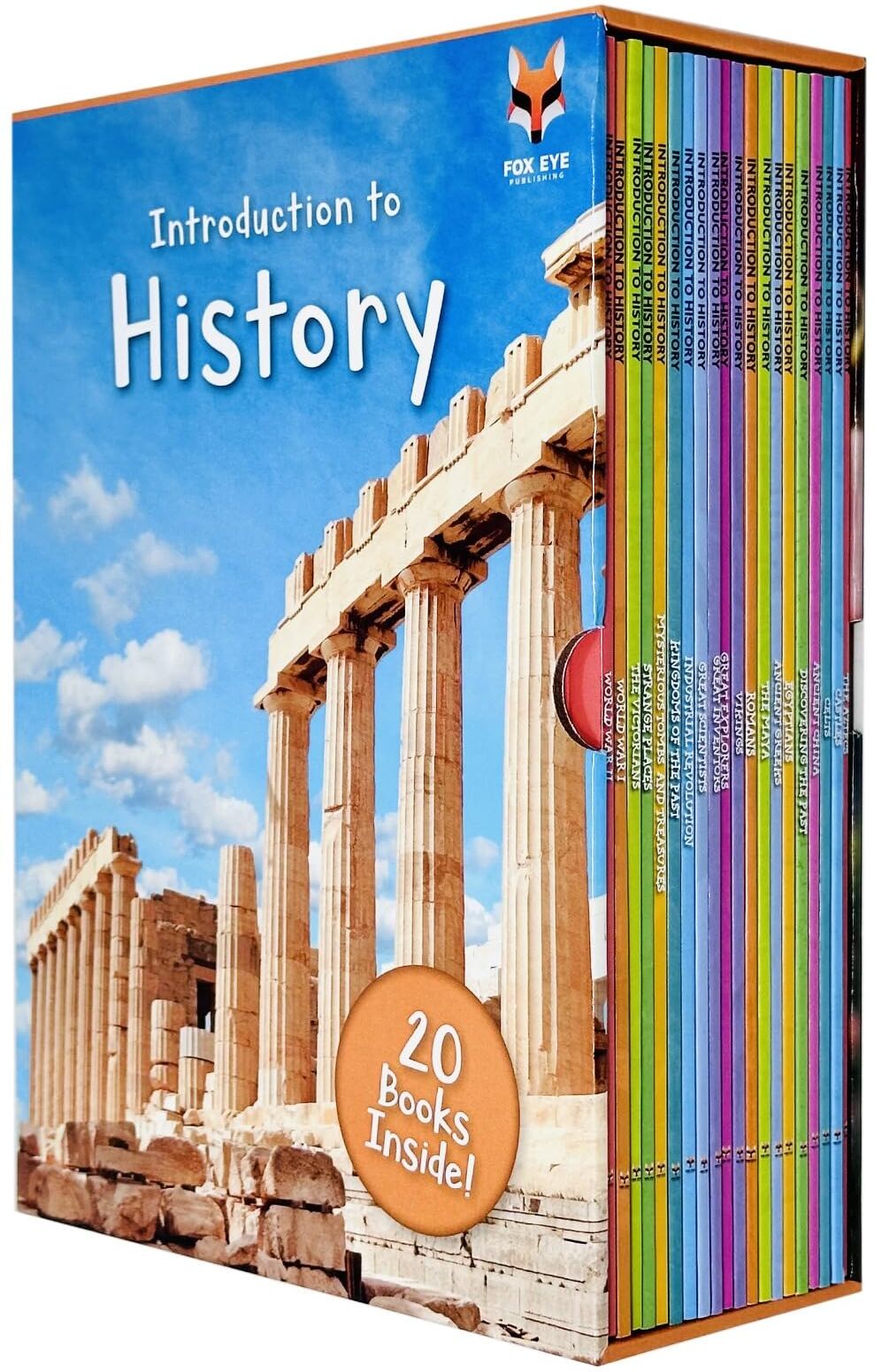
Fox Eye Publishing Introduction to History 20 Books Collection Box Set – Educational History Learning CollectionIntroduction to History 20 Books Collection Box Set (The Aztecs, Castles, Celts, Ancient China, Discovering the Past, Egyptians, Ancient Greeks, The Maya, Romans, Vikings, Great Explorers and More) Books in This Collection: Introduction to The Aztecs Introduction to Castles Introduction to Celts Introduction to Ancient China Introduction to Discovering the Past Introduction to Egyptians Introduction to Ancient Greeks Introduction to The Maya Introduction to Romans Introduction to Vikings Introduction to Great Explorers Introduction to Great Inventors Introduction to Great Scientists Introduction to Industrial Revolution Introduction to Kingdoms of the Past Introduction to Mysterious Tombs and Treasures Introduction to Strange Places Introduction to The Victorians Introduction to World War I Introduction to World War II12,99 £*Shipping: 2,99 £Secure redirect to the provider


-
Is it enough to learn 20 vocabulary words per day?
Learning 20 vocabulary words per day can be a good start, but it may not be enough to fully grasp and retain all the words. It's important to also focus on understanding the context in which the words are used, practicing using them in sentences, and reviewing them regularly to reinforce learning. Additionally, everyone's learning pace and capacity is different, so it's important to find a balance that works for you and allows for thorough understanding and retention of the vocabulary. **
-
Which vocabulary learning app?
There are several popular vocabulary learning apps available, each with its own unique features and benefits. Some popular options include Duolingo, Quizlet, and Memrise. Duolingo offers a wide range of languages and uses gamified lessons to make learning fun. Quizlet allows users to create their own study sets and offers a variety of study modes. Memrise focuses on using mnemonic devices and real-life videos to help users remember vocabulary. Ultimately, the best app for you will depend on your learning style and the specific features you are looking for. **
-
What are some good books for learning French, especially for grammar and vocabulary?
Some good books for learning French grammar and vocabulary include "Practice Makes Perfect: Complete French Grammar" by Annie Heminway, "Easy French Step-by-Step" by Myrna Bell Rochester, and "Vocabulary Builder: French" by Harriette Lanzer. These books provide comprehensive explanations of grammar rules and offer plenty of exercises to practice and reinforce your understanding. Additionally, "501 French Verbs" by Christopher Kendris is a valuable resource for learning and mastering French verb conjugations. **
-
Search for Latin vocabulary from Prima A, lessons 20 and 21.
In Prima A, lessons 20 and 21, you can find Latin vocabulary related to topics such as family, occupations, and daily activities. Some of the words you may encounter include "pater" (father), "mater" (mother), "frater" (brother), "soror" (sister), "agricola" (farmer), "mercator" (merchant), "laboro" (I work), "ambulo" (I walk), and "dormio" (I sleep). These words are essential for building a foundational understanding of Latin language and culture. **


How can you change the language in FIFA 20?
To change the language in FIFA 20, you can go to the game's main menu and navigate to the settings or options menu. Look for the language or audio settings section where you can select a different language from the available options. Once you have chosen the desired language, save the changes and restart the game for the new language settings to take effect. **
Is it possible to learn language through listening and learning vocabulary like babies do?
Yes, it is possible to learn a language through listening and learning vocabulary like babies do. This method, known as natural language acquisition, involves immersing oneself in the language and absorbing it through exposure and repetition. By listening to native speakers and gradually building vocabulary, learners can develop a strong foundation in the language. However, it is important to supplement this approach with speaking and writing practice to fully develop language skills. **
Top-Angebote
Products related to 20:
-
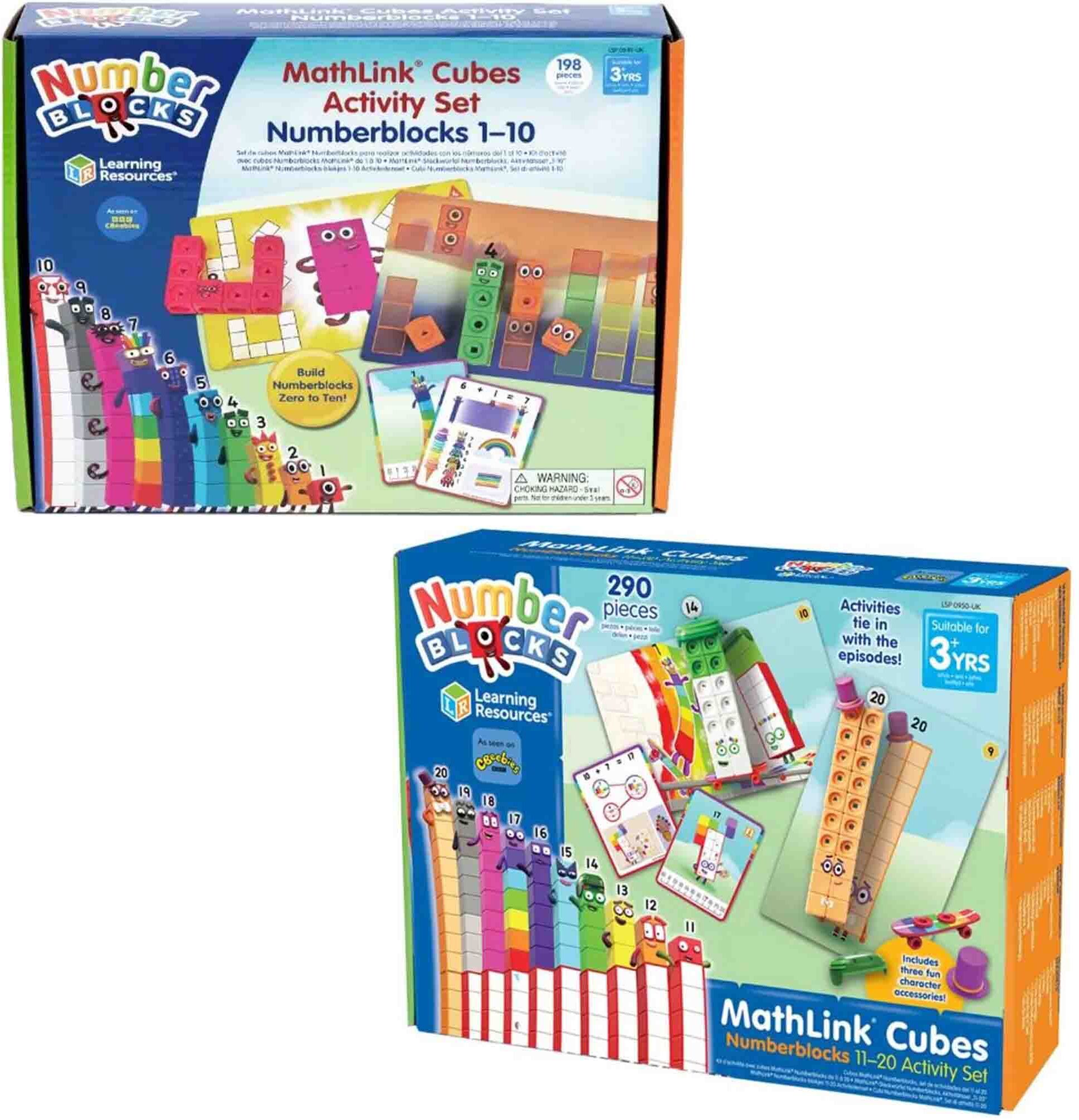
MathLink Cubes Numberblocks 11-20 Activity Set by Learning Resources - Ages 3+ - Educational Toy Learning ResourcesLearning Resources Numberblocks MathLink Cubes are a popular educational tool used by teachers, parents, and children to explore mathematical concepts in a fun and engaging way. MathLink Cubes are a set of colourful plastic blocks that can be snapped together to create different shapes and patterns. Each cube measures one centimetre on each side and comes in ten different colours, making them ideal for counting, sorting, and creating visual representations of mathematical concepts. One of the primary uses of MathLink Cubes is to teach young children basic counting and number recognition skills. The blocks are brightly coloured and easy to handle, making them a great tool for teaching counting and sorting skills. Children can use cubes to count up to ten, and the different colours can be used to represent different numbers, helping children to visualize the relationships between numbers. Another important use of MathLink Cubes is to teach basic addition and subtraction skills. Children can use the cubes to build simple equations, adding and subtracting cubes to find the correct answer. The blocks can be arranged in different patterns to help children understand the concept of adding and subtracting in different ways, making it easier for them to grasp the underlying principles of mathematical operations. Count on these colourful cubes to bring Numberblocks learning to life! For more adventures with these clever little blocks, be sure to check out our Numberblocks page! What’s included: 155 Numberblocks MathLink Cubes 50 faceplates 43 stickers 10 Numberlings (the numerals to go above the Numberblocks to show the value) 10 Character Cards 15 double-sided write-and-wipe activity cards Fourteen’s Skateboard and Helmet Twenty’s Top Hat 1 Supporting Activity Guide MathLink Cubes can also be used to teach more advanced mathematical concepts, such as multiplication and division. By combining multiple cubes to create larger structures, children can begin to understand the principles of multiplication and division and the concept of area and volume. The blocks can also be used to teach basic geometry, with children building shapes and patterns to explore the properties of different geometric figures. In addition to their educational uses, MathLink Cubes are also an excellent tool for developing fine motor skills and spatial reasoning abilities. The blocks are easy to snap together and take apart, requiring children to use their fingers and hands to manipulate the pieces. By building structures with the blocks, children can develop their spatial reasoning skills, learning to visualize three-dimensional objects and manage them in their minds. MathLink Cubes are also a great tool for collaborative learning. Children can work together to build structures and solve problems, encouraging teamwork and communication skills. Teachers can use the blocks to create interactive learning activities that engage students in a hands-on way, promoting active learning and...32,99 £*Shipping: 2,99 £Secure redirect to the provider
-
MathLink Cubes Numberblocks 1-20 Activity Set by Learning Resources - Ages 3+ - Educational Toy Learning ResourcesLearning Resources Numberblocks MathLink Cubes are a popular educational tool used by teachers, parents, and children to explore mathematical concepts in a fun and engaging way. MathLink Cubes are a set of colourful plastic blocks that can be snapped together to create different shapes and patterns. Each cube measures one Inch on each side and comes in ten different colours, making them ideal for counting, sorting, and creating visual representations of mathematical concepts. One of the primary uses of MathLink Cubes is to teach young children basic counting and number recognition skills. The blocks are brightly coloured and easy to handle, making them a great tool for teaching counting and sorting skills. Children can use cubes to count up to ten, and the different colours can be used to represent different numbers, helping children to visualize the relationships between numbers. Another important use of MathLink Cubes is to teach basic addition and subtraction skills. Children can use the cubes to build simple equations, adding and subtracting cubes to find the correct answer. The blocks can be arranged in different patterns to help children understand the concept of adding and subtracting in different ways, making it easier for them to grasp the underlying principles of mathematical operations. Count on these colourful cubes to bring Numberblocks learning to life! For more adventures with these clever little blocks, be sure to check out our Numberblocks page! Titles in this set: 1. MathLink Cubes Numberblocks 1-10 Activity Set 2. MathLink Cubes Numberblocks 11-20 Activity Set Description: MathLink Cubes Numberblocks 1-10 Activity Set Meet the Numberblocks® , stars of the award-winning CBeebies series! Now children can build their own Numberblocks characters using award-winning MathLink Cubes, follow 30 hands-on activities linked to the episodes, and play along as they watch episodes and learn. This special edition MathLink® Cubes set brings Numberblocks® learning to life as children see how numbers work and master key Early Learning maths skills through hands-on discovery and play. This set includes all children need to build the Numberblocks characters One to Ten in all configurations seen during episodes. MathLink® Cubes Numberblocks 1-10 Activity Set is ideal for maths learning in the classroom or at home. The 30 activities on the 15 write-and-wipe activity cards feature fun ways for children to use MathLink Cubes to develop early maths skills. The activities have been developed to help children recognise numbers, learn to count, add and subtract, discover division and multiplication, and develop problem-solving skills. Children use the colourful Character Cards to learn more about each number. MathLink Cubes are durable stackable cubes that are easy for little hands to stack, connect and twist apart. The set includes 100 Numberblocks MathLink Cubes, 59 faceplates, 54 stickers, 11 Numberlings, 11 Character Cards, 15 double-sided write and...52,99 £*Shipping: 0,00 £Secure redirect to the provider
-
Learning Resources Hot Dots Numberblocks 11–20 Activity Book & Interactive Pen, Over 60 Activities Included - Age 5+ - Educational Toy Learning ResourcesCount on Hot Dots to bring learning with the Numberblocks to life anywhere, anytime. The Hot Dots interactive way of learning encourages children to learn independently and at their own pace. Hot Dots is easy to use – review the question and touch the tip of the interactive Hot Dots pen to a dot for immediate feedback. Select the correct answer and the pen glows green. The pen glows red for the incorrect answer. Press the audio button to incorporate fun Numberblocks sounds into the learning. The special edition Numberblocks Hot Dots pen is chunky and easy for little hands to hold, and has a rubberised, textured grip. The durable, spiral-bound Activity Book has over 100 activities featuring Numberblocks Eleven to Twenty. The content covers a range of early years maths activities including number recognition for 11–20, number order, matching, addition and subtraction, multiplication and division, comparing numbers, and problem-solving. Includes Numberblocks 11–20 Activity Book and interactive pen. Book measures 19cm L x 14cm W and the pen is 16cm L. After the learning fun is over, the book and interactive pen store inside the packaging which also has a convenient carrier handle. Pen requires 2 AAA batteries not included.26,99 £*Shipping: 2,99 £Secure redirect to the provider
-
Fox Eye Publishing Introduction to History 20 Books Collection Box Set – Educational History Learning CollectionIntroduction to History 20 Books Collection Box Set (The Aztecs, Castles, Celts, Ancient China, Discovering the Past, Egyptians, Ancient Greeks, The Maya, Romans, Vikings, Great Explorers and More) Books in This Collection: Introduction to The Aztecs Introduction to Castles Introduction to Celts Introduction to Ancient China Introduction to Discovering the Past Introduction to Egyptians Introduction to Ancient Greeks Introduction to The Maya Introduction to Romans Introduction to Vikings Introduction to Great Explorers Introduction to Great Inventors Introduction to Great Scientists Introduction to Industrial Revolution Introduction to Kingdoms of the Past Introduction to Mysterious Tombs and Treasures Introduction to Strange Places Introduction to The Victorians Introduction to World War I Introduction to World War II12,99 £*Shipping: 2,99 £Secure redirect to the provider
-
Should one learn grammar or vocabulary first when learning Japanese?
When learning Japanese, it is generally recommended to start with vocabulary before diving into grammar. Building a strong vocabulary base will help you understand and communicate better in the language. Once you have a good grasp of basic vocabulary, you can then focus on learning grammar rules to structure your sentences correctly. Ultimately, a balance of both vocabulary and grammar is essential for mastering Japanese. **
-
How can I quickly memorize 20 vocabulary words by tomorrow?
One effective way to quickly memorize 20 vocabulary words by tomorrow is to create flashcards. Write the word on one side and the definition on the other, then review them multiple times throughout the day. Another method is to create a story or mnemonic device that connects the words and their meanings in a memorable way. Additionally, practicing active recall by testing yourself on the words and their meanings will help reinforce your memory. Finally, try to use the words in context by incorporating them into sentences or conversations to further solidify your understanding and retention. **
-
Is it enough to learn 20 vocabulary words per day?
Learning 20 vocabulary words per day can be a good start, but it may not be enough to fully grasp and retain all the words. It's important to also focus on understanding the context in which the words are used, practicing using them in sentences, and reviewing them regularly to reinforce learning. Additionally, everyone's learning pace and capacity is different, so it's important to find a balance that works for you and allows for thorough understanding and retention of the vocabulary. **
-
Which vocabulary learning app?
There are several popular vocabulary learning apps available, each with its own unique features and benefits. Some popular options include Duolingo, Quizlet, and Memrise. Duolingo offers a wide range of languages and uses gamified lessons to make learning fun. Quizlet allows users to create their own study sets and offers a variety of study modes. Memrise focuses on using mnemonic devices and real-life videos to help users remember vocabulary. Ultimately, the best app for you will depend on your learning style and the specific features you are looking for. **
Similar search terms for 20
-
What are some good books for learning French, especially for grammar and vocabulary?
Some good books for learning French grammar and vocabulary include "Practice Makes Perfect: Complete French Grammar" by Annie Heminway, "Easy French Step-by-Step" by Myrna Bell Rochester, and "Vocabulary Builder: French" by Harriette Lanzer. These books provide comprehensive explanations of grammar rules and offer plenty of exercises to practice and reinforce your understanding. Additionally, "501 French Verbs" by Christopher Kendris is a valuable resource for learning and mastering French verb conjugations. **
-
Search for Latin vocabulary from Prima A, lessons 20 and 21.
In Prima A, lessons 20 and 21, you can find Latin vocabulary related to topics such as family, occupations, and daily activities. Some of the words you may encounter include "pater" (father), "mater" (mother), "frater" (brother), "soror" (sister), "agricola" (farmer), "mercator" (merchant), "laboro" (I work), "ambulo" (I walk), and "dormio" (I sleep). These words are essential for building a foundational understanding of Latin language and culture. **
-
How can you change the language in FIFA 20?
To change the language in FIFA 20, you can go to the game's main menu and navigate to the settings or options menu. Look for the language or audio settings section where you can select a different language from the available options. Once you have chosen the desired language, save the changes and restart the game for the new language settings to take effect. **
-
Is it possible to learn language through listening and learning vocabulary like babies do?
Yes, it is possible to learn a language through listening and learning vocabulary like babies do. This method, known as natural language acquisition, involves immersing oneself in the language and absorbing it through exposure and repetition. By listening to native speakers and gradually building vocabulary, learners can develop a strong foundation in the language. However, it is important to supplement this approach with speaking and writing practice to fully develop language skills. **
* All prices are inclusive of VAT and, if applicable, plus shipping costs. The offer information is based on the details provided by the respective shop and is updated through automated processes. Real-time updates do not occur, so deviations can occur in individual cases. ** Note: Parts of this content were created by AI.